Introduction
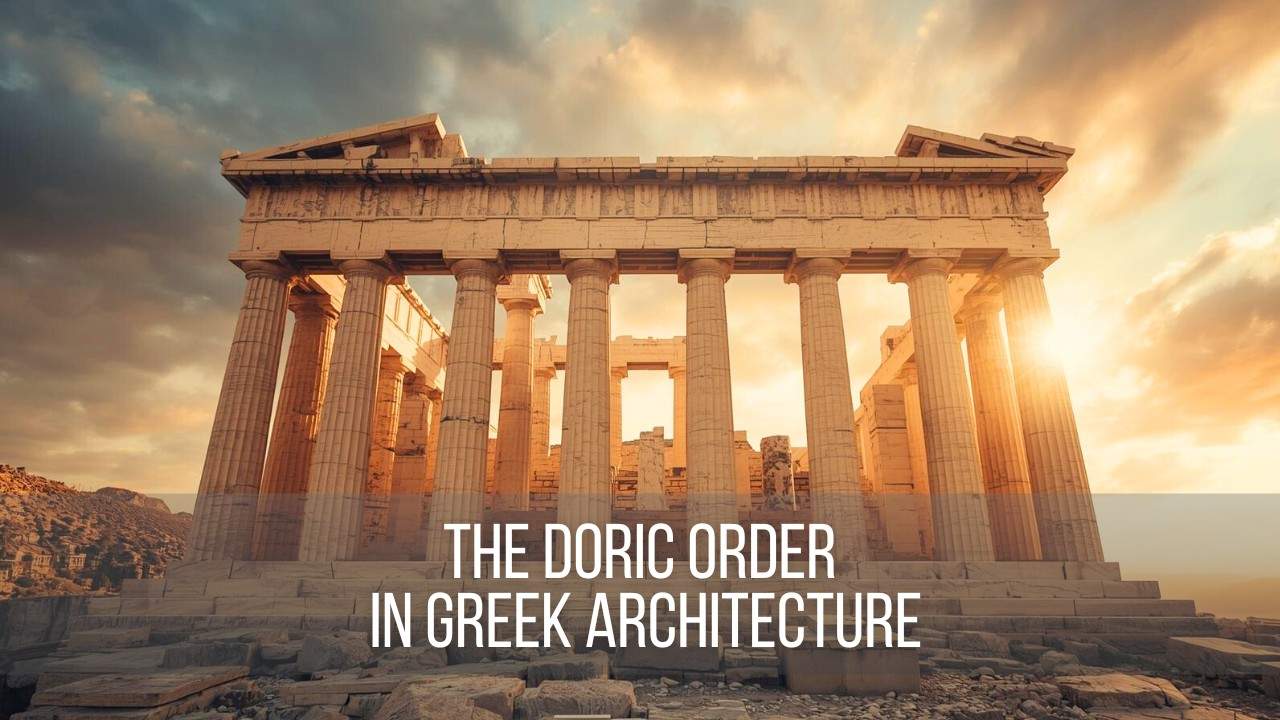
The Doric Order is the oldest and most powerful of the three classical Greek architectural styles; Emerging in the 7th century BCE in mainland Greece, it represented strength, masculinity, and simplicity. Unlike its more decorative counterparts, this style focused on proportion, function, and dignity, becoming the foundation of some of the greatest temples in history.
In this article, we will explore the history, key features, famous examples, symbolism, and lasting legacy of the style.
The Origins of the Style
The style developed around 600 BCE in mainland Greece and the Peloponnesus, later spreading to southern Italy and Sicily.
It was the preferred style for early temples, designed to reflect permanence and power. The simplicity of Doric architecture made it practical and durable, while still visually striking.
Its evolution shows the Greek pursuit of mathematical harmony and proportion. Even though the design was simple, its execution required remarkable precision.
Read more about Greek architecture
Table of Contents
Key Features of the Doric Order
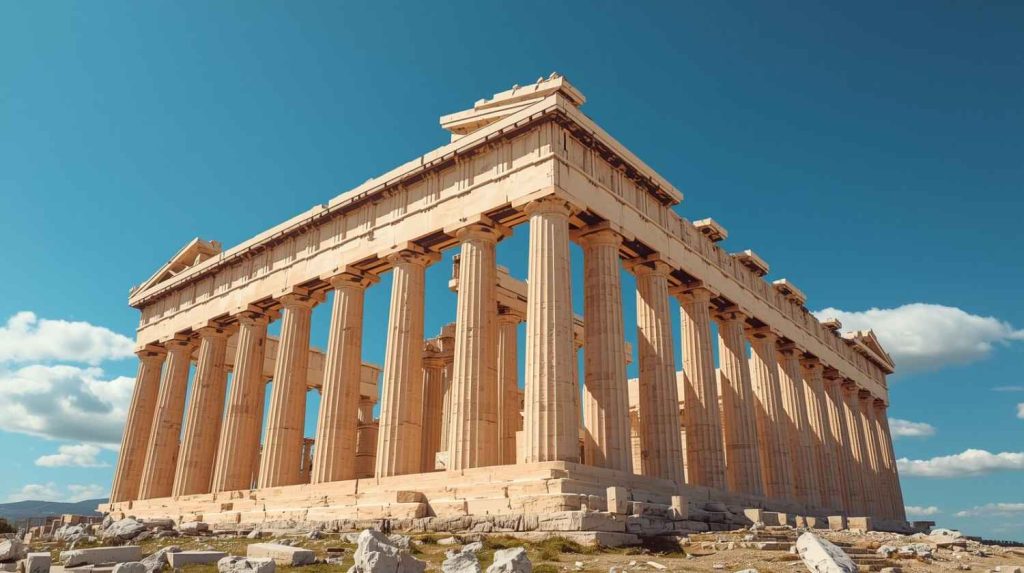
1. Columns
Short and sturdy with no base, rising directly from the platform (stylobate).
Fluted shafts with 20 vertical grooves that caught the sunlight dramatically.
A slight entasis (curvature) in the shaft made the columns appear straight and visually balanced.
Proportion typically followed a 1:6 to 1:7 ratio of height to diameter.
2. Capitals
The top of the column, or capital, was plain yet elegant.
Consisted of a rounded echinus and a flat square abacus.
Lacked decorative motifs, emphasizing the order’s minimalism.
3. Entablature
The structure resting above the columns included:
Architrave – plain, horizontal beam.
Frieze – alternating triglyphs (three vertical grooves) and metopes (square panels, sometimes carved with reliefs).
Cornice – projecting upper section for shadow and depth.
4. Overall Character
Solid, masculine, and monumental.
Favored in temples where strength and permanence were symbolic.

Famous Examples of the Style
1. The Parthenon (Athens, 447–432 BCE)
Perhaps the most famous temple in the world, the Parthenon is primarily Doric with subtle Ionic details. It embodies perfect proportions and symmetry.
2. Temple of Hephaestus (Athens, 449 BCE)
Known as the best-preserved Doric temple, it stands near the Agora and reflects the order’s simplicity and durability.
3. Temple of Hera (Olympia, c. 590 BCE)
One of the earliest Doric temples, showing the transition from wood to stone construction.
4. Temple of Apollo (Corinth, 540 BCE)
Its massive stone columns remain an iconic reminder of the Doric style’s strength.
5. Paestum Temples (Italy, 6th century BCE)
Doric temples in southern Italy, such as the Temple of Hera and Temple of Athena, showcase how the order spread beyond Greece.
Symbolism of the Style
The Doric Order symbolized strength, masculinity, and discipline.
Its sturdy proportions conveyed power and authority.
Its simplicity reflected Greek ideals of balance and harmony.
Often contrasted with the more slender, “feminine” Ionic columns and the ornate Corinthian designs.
For the Greeks, each order carried cultural meaning, making the Doric style a fitting choice for temples dedicated to gods of strength and wisdom.
The Legacy of the Style
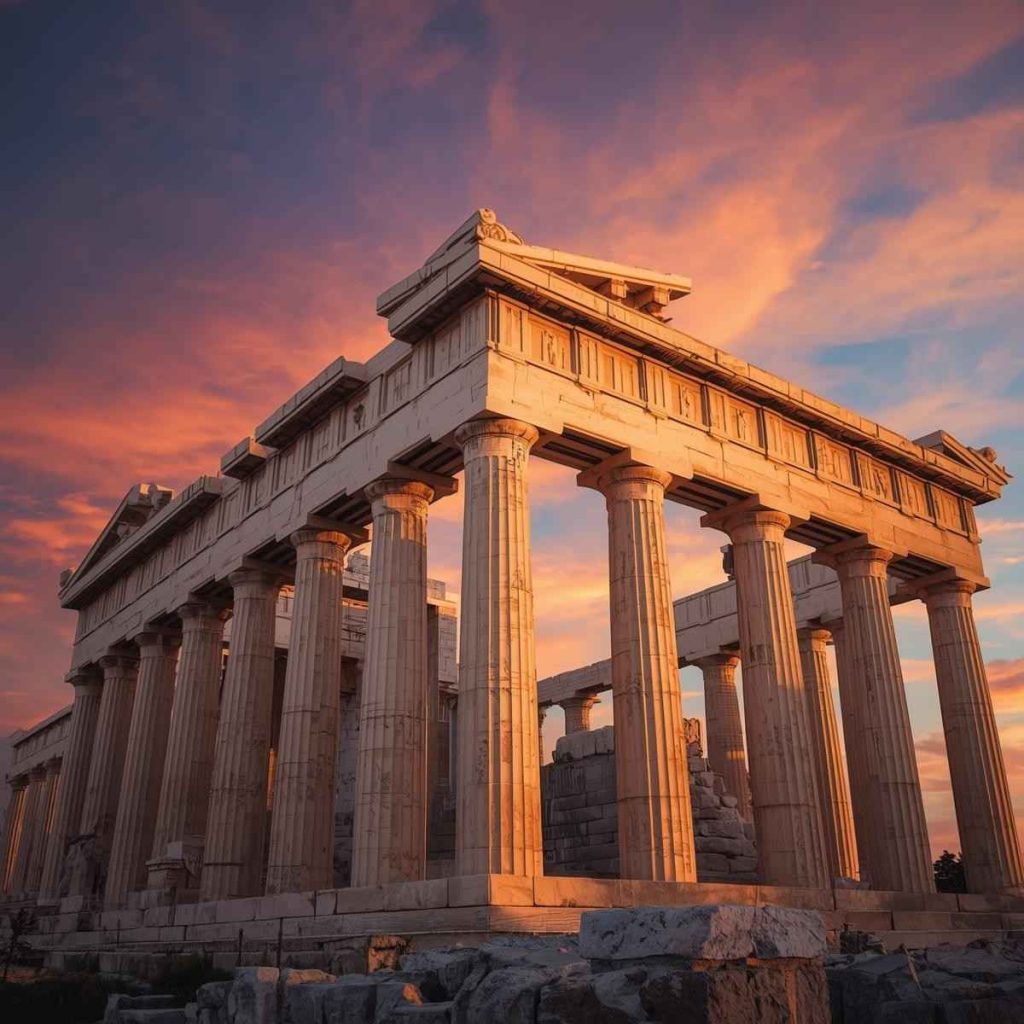
The Doric Order profoundly influenced not only Greek temples but also Roman and Neoclassical architecture.
Romans adopted Doric columns but often modified them by adding bases.
Neoclassical architects (18th–19th centuries) revived the Doric style for civic and government buildings, symbolizing democracy and authority.
Today, Doric columns appear in courthouses, museums, universities, and war memorials, representing permanence and dignity.
Examples include the Lincoln Memorial (Washington, D.C.), which directly reflects Doric inspiration.
Why the Style Still Matters
The Doric Order endures as a universal symbol of strength, simplicity, and timeless beauty. Its influence can be seen in classical revivals across the world, proving that design rooted in proportion and harmony never goes out of style.
For architects, historians, and designers, the Doric Order remains a reminder of how ancient Greece shaped the very foundations of architecture.
Conclusion
For architects, historians, and designers, the doric order remains a reminder of how ancient Greece shaped the very foundations of architecture.
The Doric Order is more than just an architectural style – it is a philosophy of design rooted in function, proportion, and dignity. From the Parthenon in Athens to modern neoclassical monuments, its legacy continues to stand strong. By embracing simplicity and balance, the style reflects values that remain as relevant today as they were 2,500 years ago.
Read more about history of architecture
FAQs about the Doric Order
1. What makes the Doric Order different from Ionic and Corinthian?
The Doric Order is the simplest and strongest style, with no column bases and plain capitals, while Ionic and Corinthian are more slender and decorative.
2. What are the main features of Doric columns?
Doric columns are short, sturdy, fluted, and rise directly from the platform. They feature simple capitals with an echinus and abacus.
3. Why was the Doric Order important in Greek architecture?
It symbolized strength and masculinity, making it the preferred style for temples and public buildings in mainland Greece.