

Introduction
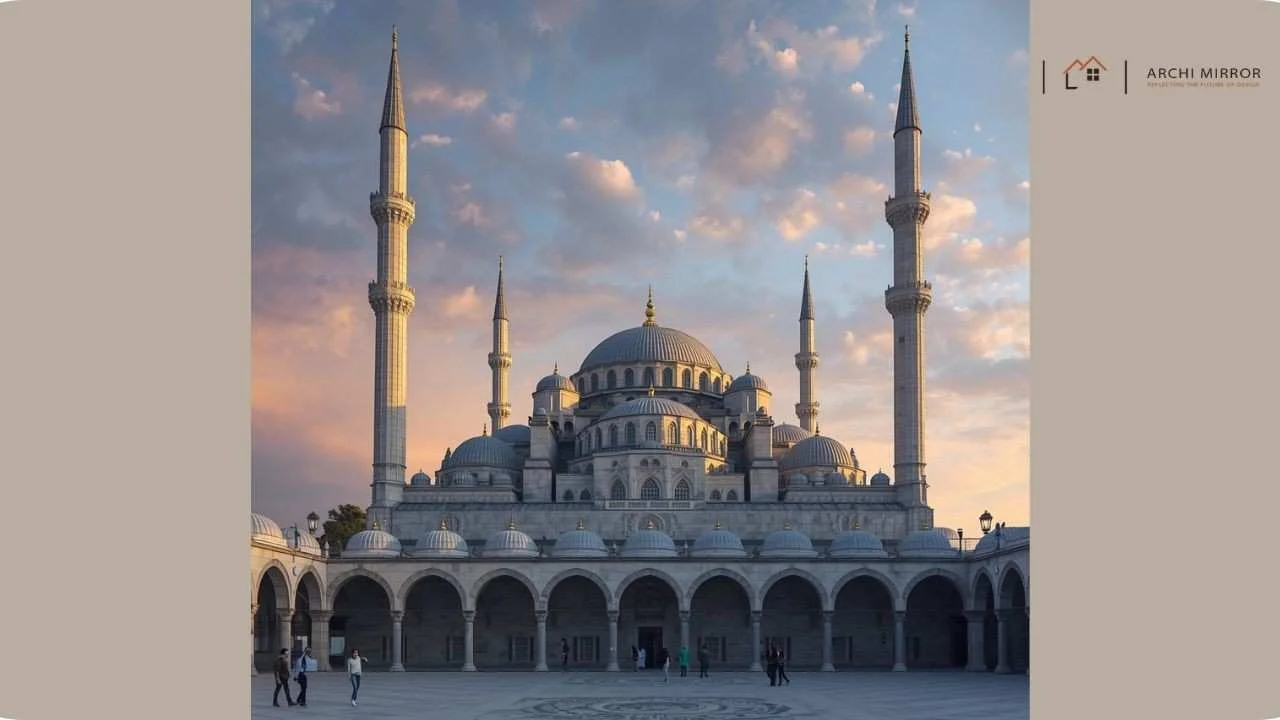
The Blue Mosque Officially known as the Sultan Ahmed Mosque, stands as one of the most iconic architectural landmarks in Istanbul, Turkey. Built at the height of the Ottoman Empire, this magnificent structure blends Islamic architecture, Byzantine influences, and Ottoman engineering excellence into a single harmonious masterpiece.
Revered for its historical importance and celebrated for its breathtaking interior design, this continues to inspire architects, historians, and visitors from around the world.
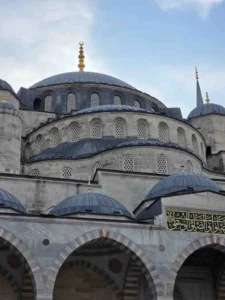
Table of Contents
Historical Background
The Blue Mosque was commissioned by Sultan Ahmed I in the early 17th century and constructed between 1609 and 1616. At the time, the Ottoman Empire was facing political and military challenges, and the Sultan sought to reaffirm imperial power and religious devotion through monumental architecture.
Unlike earlier mosques funded by war spoils, the Blue Mosque was financed directly from the royal treasury an unusual decision that sparked criticism but ultimately underscored the Sultan’s spiritual intentions. Upon its completion, the mosque became a powerful symbol of faith, authority, and architectural ambition.
About more details about Historical background Click Here
Architect Sedefkâr Mehmed Ağa and His Vision
The mosque was designed by Sedefkâr Mehmed Ağa, a master architect and student of the legendary Mimar Sinan. Mehmed Ağa aimed to surpass earlier Ottoman mosques by merging classical Ottoman design with the grandeur of Byzantine structures.
His vision was to create a mosque that was not only visually impressive but also spiritually immersive using scale, symmetry, light, and ornamentation to evoke divine presence.
Architectural Style and Design Philosophy
The Blue Mosque represents the culmination of classical Ottoman mosque architecture. It is characterized by:
- Perfect symmetry
- A cascading dome system
- Balanced proportions
- Integration of interior and exterior spatial flow
The design reflects Islamic architectural principles emphasizing unity, harmony, and order, while also drawing inspiration from Hagia Sophia’s central dome structure.
Exterior Architecture: Domes, Courtyard, and Minarets
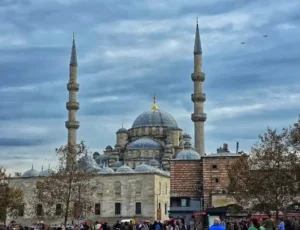
One of the mosque’s most striking features is its six minarets, a rare and controversial choice at the time, as only the Grand Mosque in Mecca had six. To resolve the controversy, a seventh minaret was later added to Mecca.
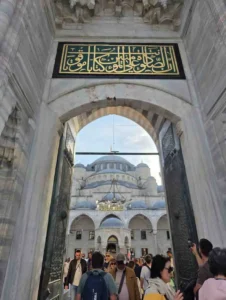
The mosque’s grand courtyard, nearly as large as the prayer hall, is surrounded by a continuous arcade and features a central ablution fountain. The cascading domes rise elegantly above, creating a monumental skyline.
Interior Architecture: Spatial Grandeur and Light
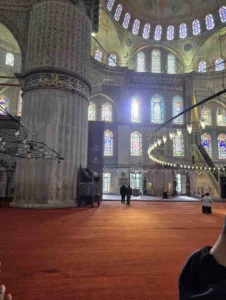
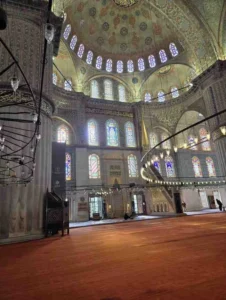
Stepping inside the Blue Mosque reveals a vast, unified prayer hall designed to accommodate thousands of worshippers. The interior space is defined by:
- A massive central dome (23.5 meters in diameter)
- Four monumental “elephant foot” pillars
- An open, flowing spatial composition
More than 260 windows flood the interior with natural light, enhancing the sense of openness and spiritual calm.
Iznik Tiles and Interior Ornamentation
The mosque derives its popular name from the over 20,000 hand-painted Iznik tiles adorning its interior. These tiles feature intricate floral patterns tulips, carnations, roses, and lilies-rendered in shades of blue, turquoise, and white.
Each tile was crafted using traditional Ottoman techniques, making the interior not only an architectural marvel but also a masterpiece of decorative art.
Calligraphy, Mihrab, and Minbar Design
Islamic calligraphy plays a vital role in the mosque’s interior aesthetics. Verses from the Qur’an, inscribed by renowned calligrapher Seyyid Kasım Gubari, adorn the walls and domes.
The mihrab (prayer niche) is carved from finely sculpted marble, while the minbar (pulpit) features intricate stone craftsmanship. Together, they form the spiritual focal point of the mosque.
Structural Engineering and Construction Techniques
From an engineering perspective, the Blue Mosque is a triumph. Its weight distribution system using semi-domes and supporting pillars ensures stability while maintaining visual elegance.
Stone, marble, and brick were carefully selected and assembled using techniques refined during the Ottoman architectural golden age. The building has survived centuries of earthquakes, a testament to its structural brilliance.
Cultural and Religious Significance
Beyond architecture, the Blue Mosque functions as an active place of worship and a cultural landmark. It embodies the Ottoman vision of blending religion, art, and civic life into a single monumental space.
Today, it remains central to Islamic practices in Istanbul while welcoming millions of visitors annually, fostering cross-cultural understanding.
Legacy of the B. Mosque in World Architecture
Influenced mosque design across the Islamic world and solidified Istanbul’s status as a global architectural capital. Its harmonious proportions, interior decoration, and urban presence continue to inspire contemporary mosque architecture.
More than four centuries later, it stands not just as a historical monument, but as a living symbol of Ottoman architectural excellence and Islamic artistry.
Conclusion
The Blue Mosque is far more than a tourist attraction; it is a masterclass in architectural balance, historical symbolism, and spiritual design. From its ambitious origins under Sultan Ahmed I to its enduring influence on Islamic architecture, the mosque remains a timeless testament to human creativity and devotion.
FQA,
Why is the Blue Mosque called the Blue Mosque?
The Blue Mosque gets its name from the more than 20,000 hand-painted Iznik tiles that decorate its interior walls. These tiles feature intricate floral motifs in shades of blue, turquoise, and white, creating a dominant blue ambiance inside the mosque.
When was the Blue Mosque built and who commissioned it?
The Blue Mosque was built between 1609 and 1616 during the rule of Sultan Ahmed I. It was commissioned to reaffirm Ottoman imperial power and religious devotion during a challenging political period for the empire.
What makes the architecture of the Blue Mosque unique?
The mosque is famous for its cascading dome system, perfect symmetry, and six minarets—an unusual feature at the time. Its design blends classical Ottoman architecture with Byzantine influences, particularly inspired by the nearby Hagia Sophia.
What are the main architectural features inside the Blue Mosque?
The interior features a massive central dome (23.5 meters in diameter), four large supporting pillars known as “elephant feet,” over 260 stained-glass windows, an intricately carved marble mihrab, and detailed Islamic calligraphy throughout the prayer hall.
Is the Blue Mosque still used today?
Yes, the Blue Mosque remains an active place of worship and one of Istanbul’s most visited landmarks. It functions both as a working mosque and a major historical and architectural attraction open to visitors outside prayer times.


